Cruises 2026: Why They're Not as Cheap or as Comfortable as They Seem
- May 29
- 9 min read
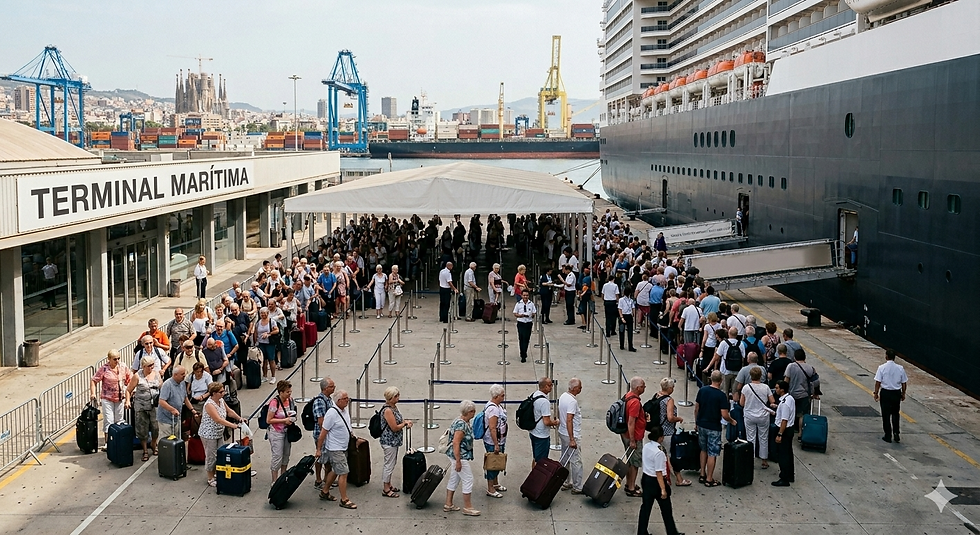
At first glance, cruise deals for 2026 can look incredibly appealing.
Multiple destinations, one cabin, and a fully organized trip all wrapped into a single package.
But once you start reading the fine print, doubts begin to appear.
Mandatory gratuities, port fees, expensive shore excursions, paid internet access, basic travel insurance, strict schedules, dress codes, and only a few hours in each destination can quickly change the picture.
What initially looks like an easy and affordable holiday can end up being far more expensive and restrictive than expected.
Whether you're comparing Royal Caribbean, Norwegian Cruise Line (NCL), MSC Cruises, Carnival Cruise Line, Princess Cruises, or Celebrity Cruises, what really matters is understanding exactly what is included in the advertised price.
A cruise can be a great option for some travelers, especially those who enjoy life at sea, onboard entertainment, and the convenience of unpacking only once.
However, there is one important thing to understand before booking
A cruise is not really a trip designed to explore destinations in depth. It is primarily a sea-based experience with short stops at different ports.
1. Assuming the Advertised Price Is the Real Price
One of the most common mistakes is focusing only on the headline price.
The advertised fare may look attractive, but it rarely tells the whole story.
Once you add drinks, gratuities, excursions, internet packages, port fees, transfers, specialty restaurants, laundry services, photographs, spa treatments, and various onboard extras, the final cost can be significantly higher than expected.
2. Not Checking Which Drinks Are Included
Basic beverages may be included, but soft drinks, specialty coffees, wine, beer, and cocktails are often extra.
If you do not pay attention to the beverage policy before booking, drink expenses can quickly add up during the cruise, especially on longer itineraries.
3. Forgetting About Mandatory Gratuities
Many cruise lines automatically charge a daily gratuity or service fee for each passenger.
Because these charges are added automatically, travelers often overlook them when comparing prices.
Individually they may seem small, but over several days and multiple passengers they can make a noticeable difference to the final bill.
4. Overlooking Port Fees and Additional Charges
In addition to the cruise fare itself, port taxes and other port-related charges may apply.
These costs are often hidden within the booking process and can easily be overlooked when comparing deals.
However, they are part of the true cost of the trip and should always be included in your budget.
5. Expecting to Truly Explore Every Destination
This is probably one of the most important points.
A cruise may visit several cities or countries, but that does not mean you will truly experience them.
Many port stops last only a few hours.
You disembark, take an excursion or visit a few well-known attractions, and then return to the ship before departure time.
The experience can feel a bit like speed dating: you arrive, see the highlights while watching the clock, and then leave.
That is why it is important to understand what you are actually booking.
A cruise is not primarily about exploring destinations in depth it is about enjoying time at sea with brief stops along the way.
6. Booking Shore Excursions Without Comparing Options
Cruise-line excursions are convenient, but they are often expensive.
In many cases, they cost considerably more than arranging a similar activity independently.
That does not mean they should always be avoided.
For some travelers, the extra security and convenience are worth paying for.
However, before booking, it is worth comparing prices, duration, difficulty level, language options, and the amount of actual time spent at the destination.
Si crees que puede ayudar a alguien, compártelo.
7. Not Checking Internet Costs and Mobile Data Charges
Internet access at sea usually relies on satellite connections.
As a result, it can be expensive, slow, or limited depending on the ship, route, and cruise line.
Many travelers are used to constantly using WhatsApp, social media, video calls, maps, email, and cloud services without thinking much about data consumption. On a cruise, that habit can become surprisingly expensive.
Before boarding, check whether Wi-Fi is included, how much it costs, what speeds are offered, and whether multiple devices can be connected.
It is also important to understand what happens when your phone connects to maritime or satellite networks while the ship is sailing. Unexpected roaming charges can be extremely high.
To avoid unpleasant surprises, consider turning off data roaming when the ship leaves port, using airplane mode when you do not need connectivity, and connecting only through the ship's Wi-Fi package or trusted networks while ashore.
The same applies to eSIMs. Many work perfectly in ports and coastal areas but do not provide coverage in the middle of the ocean. At sea, you may find yourself relying entirely on the ship's internet service.
8. Choosing the Wrong Cabin
Inside cabins are usually the cheapest option, but they have no windows.
For some travelers that is perfectly fine.
For others, it can feel surprisingly claustrophobic after several days.
Location also matters.
Cabins near engines, elevators, entertainment venues, kitchens, or high-traffic areas may experience more noise than expected.
If you are concerned about motion, cabins located on lower decks and near the center of the ship tend to feel more stable than those located high up or near the bow and stern.
And if long walks are an issue, avoid cabins at the far ends of the ship and choose one closer to the central elevator area whenever possible.
9. Underestimating Crowds
Large cruise ships can carry thousands of passengers.
That often means buffet lines, crowded pools, queues for shore departures, and busy public spaces throughout the day.
If peace and quiet are important to you, pay close attention to the size of the ship, the time of year, and the overall style of the cruise line.
Not every cruise offers the same atmosphere.
10. Forgetting About Families With Children
Many cruises are designed with families in mind.
That means water slides, children's clubs, games, entertainment programs, music, and activities running throughout the day.
For families, this can be a huge advantage.
For travelers seeking relaxation and tranquility, however, the experience may feel very different.
A large ship during school holidays can sometimes feel more like a floating theme park than a peaceful getaway at sea.
11. Ignoring the Fine Print on Schedules, Rules, and Dress Codes
A cruise is not a completely flexible style of travel.
There are embarkation times, excursion schedules, dinner reservations, show times, and strict deadlines for returning to the ship.
Many cruises also include one or more formal evenings where passengers are expected to dress accordingly.
These rules are not necessarily a problem, but they can come as a surprise if you are used to traveling independently and setting your own pace.
Before booking, make sure the cruise style matches your expectations.
12. Assuming the Included Insurance Is Enough
Some cruise packages include basic travel insurance.
However, included coverage is not always comprehensive.
Medical treatment onboard can be expensive, and emergency evacuation from a ship may cost far more than many travelers realize.
Before departure, review the policy carefully and consider purchasing additional coverage if necessary.
A good travel insurance policy can save you a significant amount of money and stress if something unexpected happens.
13. Not Planning Your Medication Properly
If you take regular medication, bringing exactly the number of pills you need is not enough.
It is wise to carry important medication in your hand luggage, bring extra doses in case of delays, and keep prescriptions available if you are traveling internationally.
Some countries have strict rules regarding certain medications, even those that are commonly available elsewhere.
A little preparation before departure can prevent major problems later.
14. Not Checking Where the Port Is Actually Located
Not every cruise port is located close to the city center.
In some destinations, the ship may dock miles away from the main attractions, requiring additional transportation, shuttle buses, taxis, or long walks before you can start exploring.
There are also ports where the ship does not dock directly at a pier. Instead, it anchors offshore and passengers are transported to land using smaller tender boats.
For travelers with mobility issues, balance problems, or knee and joint concerns, this can be more challenging than expected.
15. Not Planning for Embarkation and Disembarkation Days
The first and last days of a cruise are often less relaxing than people imagine.
Embarkation day may involve security checks, long queues, waiting times, and several hours before your luggage arrives at your cabin.
Disembarkation day can be equally inconvenient. Many cruise lines require passengers to vacate their cabins early in the morning, even if their flight home is not until later in the day.
Having comfortable clothing, important medication, and a plan for these transition periods can make the experience much smoother.
16. Not Understanding How Onboard Payments Work
Once onboard, most cruise lines link all purchases to a credit card registered during check-in.
Every drink, excursion, specialty meal, spa treatment, or purchase is automatically charged to your account.
Because no cash changes hands and no receipts are signed for every transaction, it is surprisingly easy to spend more than expected.
Check your onboard account regularly rather than waiting until the final day to review the total.
17. Overlooking the Single Supplement When Traveling Alone
Solo travelers often face one of the least advertised cruise costs: the single supplement.
Most cruise fares are based on double occupancy. If you book a cabin alone, many cruise lines charge an additional fee to compensate for the empty bed.
Depending on the cruise, this surcharge can significantly increase the overall cost.
Some newer ships offer dedicated solo cabins, and occasional promotions waive the supplement, so it is worth researching your options carefully.
This extra cost does not always stop at the cabin.
Certain private excursions, guided tours, or small-group activities can also be more expensive for solo travelers because there is no one else to share transportation or guide costs.
18. Not Considering Itinerary Changes
Many travelers choose a cruise because it includes a specific island, city, or destination they have always wanted to visit.
However, weather conditions, sea conditions, safety concerns, or operational decisions may force the cruise line to change or cancel a scheduled port call.
If that happens, compensation is often limited or non-existent.
You may simply spend an extra day at sea or visit a different port instead.
For that reason, it is wise not to book a cruise solely because of one particular stop.
19. Underestimating Sea Conditions and Motion
Not all cruise routes feel the same.
Sailing through the Mediterranean during summer is very different from crossing the Atlantic, navigating the North Sea, or cruising through regions that experience rough weather.
If you are prone to motion sickness, both the itinerary and the season matter.
Cabins located on higher decks, near the bow, or near the stern generally experience more movement than cabins located lower and closer to the center of the ship.
Choosing the right cabin can make a significant difference.
Frequently Asked Questions Before Booking a Cruise in 2026
When Is the Best Time to Book a Cruise?
There are generally two strategies.
The first is booking many months in advance, which usually provides the widest choice of itineraries, cabins, and promotional offers.
The second is waiting for last-minute deals. These can offer excellent value, but only if you have flexible travel dates and are willing to accept whatever cabins remain available.
What If I Get Seasick?
Modern cruise ships are equipped with stabilizers that reduce movement considerably.
However, they cannot eliminate motion completely.
If seasickness concerns you, choose a cabin on a lower deck near the center of the ship, where movement is generally less noticeable.
It may also be worth bringing motion sickness medication after consulting a healthcare professional.
Can I Bring My Own Food and Drinks Onboard?
Most cruise lines have strict policies regarding food and beverages brought from outside.
Alcohol, soft drinks, and certain food items are often restricted.
Exceptions may exist for baby food, medical requirements, or severe dietary restrictions, but it is always best to check the cruise line's policy before traveling.
Should I Book Shore Excursions Through the Cruise Line or Independently?
It depends on your priorities.
Cruise-line excursions are usually more expensive, but they offer an important advantage: if the excursion is delayed, the ship will generally wait for participants.
Independent tours can save money and sometimes provide a more personal experience, but you are responsible for returning to the ship on time.
If you miss departure, the ship will not wait.
So, Is a Cruise Worth It?
That depends entirely on what you are looking for.
If you value freedom, flexibility, spontaneous travel, and spending meaningful time in each destination, a cruise may not be the best choice.
If you enjoy life at sea, onboard entertainment, the convenience of unpacking once, and visiting several places without changing hotels, a cruise can be a great option.
The key is understanding what you are booking.
A cruise is not necessarily a cheap, flexible, or immersive way to travel. It is a structured experience at sea that combines comfort and convenience with schedules, rules, extra costs, and brief visits to each destination.
Knowing this in advance does not make cruising less appealing.
In fact, it helps you choose more wisely, budget more accurately, and avoid unpleasant surprises once you are onboard.
Have you ever taken a cruise?
Did you find it relaxing, or did it feel more restrictive than you expected? Share your experience in the comments below.


Comments